416 N 3rd St, Temple, TX Mon-Fri: 7:00 AM - 9:00 PM · Sat-Sun: 7:00 AM - 6:00 PM
6+ Years in Temple · Licensed & Insured

Deck Builder in Temple, TX: Custom Decks Built for Central Texas Clay & Heat

Building a deck in Temple isn't like building one in a mild climate. Blackland clay swells after a May downpour, then shrinks and cracks open in an August drought. Footings shift, frames rack, and boards that bake at 100°F+ cup, check and fade within a couple of summers. Spring hail and straight-line winds finish off weak railings and covers. Temple Deck Builders designs and builds decks for exactly these conditions: properly sized concrete piers, flashed and bolted ledgers, ground-contact lumber where it belongs, and materials picked for how much sun and upkeep you're willing to live with.

Since 2020 we've built composite, cedar and pressure-treated decks, pool and hot tub decks, multi-level decks and covered decks with pergolas for homeowners across Bell County. We know the deep clay in Temple neighborhoods like Wyndham Hill and Bentwood, the rock-drilling work that limestone lots in Belton and Salado call for, and the HOA approvals that come with new subdivisions in Troy and Little River-Academy. Every project starts with a design consultation and material samples. You'll also get permit guidance and a firm schedule.

  • Serving Temple and Bell County since 2020
  • Bonded
  • Insured

Since 2020, Temple-area homeowners have trusted us to build decks that stay level on Blackland clay, hold up to Texas sun and storms, and connect naturally to how they live outdoors.

Request Your Free Estimate

No obligation. Fast, honest quotes.

Your information is never shared.

Online Estimates
Onsite Service
Licensed & Insured
Customer Rated
Local Expertise

Why Temple Decks Need a Builder Who Knows Central Texas

A deck that lasts 25 years in Temple has to deal with expansive clay, rocky limestone, months of triple-digit heat, hailstorms and termites. On top of that, every small city around here runs its own permit office. Here's what makes building in this part of Bell County different, and why it matters for your deck.

Heat, UV, Storms and Shifting Clay

Temple sits around 700 feet up, where the Blackland Prairie runs into the edge of the Hill Country. July and August highs average in the mid-to-upper 90s and 100°F stretches are routine. Nights often stay in the mid-70s, so deck boards barely cool off. That kind of UV fades stain in one to three years, turns untreated pine gray and makes dark composite too hot for bare feet. We get roughly 34–36 inches of rain a year, but most of it lands in heavy May–June and fall storms with long dry spells in between. On Houston Black clay east of I-35 that swing makes the ground heave and settle, which takes shallow footings with it. To the west, toward Belton and Salado, there's thin soil over limestone, and post holes need rock augers. Add spring hail, straight-line winds and occasional ice storms like Uri in 2021, and you can see why framing and hardware matter so much.

From Pier-and-Beam Bungalows to New Slab Builds

Temple's housing covers more than a century. The Craftsman bungalows and Folk Victorians near downtown sit on raised pier-and-beam foundations, so a deck there needs extra height, real stairs and sometimes a porch-style design. The 1950s–1970s ranch homes in areas like Western Hills often still have their original wood decks, built with no ledger flashing, no joist hangers and no lateral-load hardware. The 1980s–2000s brick-veneer homes bring a different problem: ledgers bolted only to brick, which is a known failure point. Since the 2010s, subdivisions in south and west Temple, Belton, Nolanville and Troy have filled up with slab homes that came with small builder-grade patios. Their owners want ground-level decks, pergolas and outdoor kitchens. Lake Belton and Stillhouse Hollow lots are sloped and rocky, so they need elevated, multi-level framing.

Permits, HOAs, Historic Districts and Corps Land

Temple, Belton and the other incorporated cities here use IRC-based codes. You'll generally need a permit if the deck attaches to the house, stands more than about 30 inches above grade, or carries a roof or pergola. Code covers footing size, ledger flashing, joist hangers, lateral-load connectors, 36-inch guards, baluster gaps under 4 inches, stair geometry and graspable handrails. We check each city's current edition and thresholds before we design. Texas 811 locates are required before anyone digs. Many HOAs in Temple, Belton, Salado and Nolanville want materials, colors and placement approved first. Salado's Main Street historic district and Temple's older downtown properties can trigger design review. Around Lake Belton and Stillhouse Hollow the shoreline belongs to the U.S. Army Corps of Engineers, so no stairs or decking can go past your property line without authorization.

A Growing, Outdoor-Living Community

Temple has about 90,000 residents and is part of the larger Killeen–Temple metro. Growth here comes from Baylor Scott & White, the VA medical center, McLane, Wilsonart, UMHB in Belton, and people moving up the I-35 corridor from Austin. Military families tied to Fort Cavazos buy and sell often, so they care about resale value and fast timelines. Acreage owners in Holland, Rogers and Moody want durable, practical construction. Almost everyone wants shade, because a deck you can't use from May to September isn't worth much here.

Know The Signs

Common Deck Problems in Temple and Bell County

Most deck failures we see around Temple come down to local conditions: clay that moves, sun that cooks finishes, storms that hit hard and termites that never quit. Here are the problems we're called out for most often, how to spot them, and what usually fixes them.

Heaving or Sinking Footings on Blackland Clay

Serious

Concrete piers or post bases that have moved up or down as the expansive clay underneath swells and shrinks. The frame racks out of square, the floor goes uneven, and stress builds at the ledger and the joist connections.

Why it happens here

Houston Black-type clay under most of Temple and the land east of I-35 can swell noticeably after heavy spring rain and then crack open inches wide during drought. Many decks from earlier decades sat on shallow precast blocks or small, short piers that never reached stable soil. Run that through years of wet-dry cycles, add a hard summer like we get most years, and individual posts move at different rates. The deck ends up twisted, bouncy or sloping toward the house.

Signs to watch for
  • Deck floor slopes or feels wavy underfoot
  • Gaps opening between the deck and the house
  • Doors to the deck rubbing or sticking
  • Posts leaning or lifting off their bases
  • Cracked or tilted concrete piers
  • Railings that no longer line up
Local patterns

This shows up most in east Temple, Lakewood Ranch, Little River-Academy, Rogers, Holland and Troy, all on deep Blackland clay. It's usually worst after a long drought followed by a wet spring, or on older decks that sit on pier blocks.

Our fix

We re-level or replace footings with deeper, properly sized concrete piers and adjustable post bases. Then we re-square the frame and check the ledger and hanger connections.

Unflashed or Brick-Mounted Ledger Boards

Emergency

The ledger is the board that ties a deck to the house. If it's missing flashing, water rots the ledger and the rim joist behind it. If it's fastened only to brick veneer, the whole deck can pull away from the house.

Why it happens here

A huge share of Temple's 1970s–2000s housing is brick veneer, and plenty of earlier decks were nailed or lag-screwed straight into the brick. Current IRC rules don't allow that. Others were bolted to framing but never flashed, so every heavy May–June storm pushes water behind the ledger. Humid Gulf air keeps it damp, and rot and corroded fasteners follow. It's the most common cause of sudden, catastrophic deck collapse.

Signs to watch for
  • Ledger fastened with nails only, or into brick
  • No metal or membrane flashing above the ledger
  • Dark staining or soft wood at the house connection
  • Rust streaks below the bolts
  • Deck pulling away from the wall
  • Interior water stains near the deck door
Local patterns

We find these constantly on ranch and tract homes in Western Hills, Bentwood, Canyon Creek and the older parts of west Temple and Belton. Many were built before ledger flashing and through-bolting became standard local practice.

Our fix

Stop using the deck. We remove the ledger, repair any rot, then re-attach to structural framing with through-bolts or structural screws and proper flashing. Where that isn't possible, we convert it to a freestanding deck.

Rotted Posts and Termite Damage at Grade

Serious

Wood posts, skirting or joists that sit in soil, or right on top of it, decay and draw subterranean termites. The structure loses strength from the bottom up, often where you can't see it.

Why it happens here

Warm soil most of the year, Gulf humidity and the long wet spells after storms make Bell County ideal for both fungal rot and subterranean termites. Older decks often had pine posts set straight into dirt or concrete, with wood rated for above-ground use only. Low ground-level decks on new-construction lots can trap moisture underneath when there's no airflow or drainage, which speeds up the damage.

Signs to watch for
  • Soft or crumbling wood at post bases
  • Mud tubes on posts, skirting or the foundation
  • Posts that sound hollow when tapped
  • Fungus or dark staining near ground level
  • Sagging beams or bouncy sections
  • Skirting boards touching the soil
Local patterns

This is common on 20-plus-year-old decks in central Temple and Heidenheimer, and on low decks with closed skirting in newer subdivisions. Rural farmhouse porches in Pendleton and Moody are especially prone where posts sit directly in the ground.

Our fix

We replace the damaged posts and framing with ground-contact-rated lumber on raised concrete piers, add airflow and clearance, and use vented skirting where it's needed.

Loose or Storm-Damaged Railings

Emergency

Guardrails that wobble, lean or have broken balusters. They look like a cosmetic problem, but they're a fall hazard, especially on elevated decks where code calls for 36-inch guards that can hold real loads.

Why it happens here

Bell County's spring thunderstorms bring big hail and straight-line winds that crack composite rail caps, bend balusters and loosen posts. A lot of older railings were notched and attached with a couple of lag screws and no blocking or tension hardware. Wood shrinks and swells through our wet-dry cycles, so those fasteners loosen a little more every year. Baluster gaps on older decks are often wider than the 4-inch limit.

Signs to watch for
  • Rail posts move when you push on them
  • Balusters loose, cracked or missing
  • Gaps between balusters wider than 4 inches
  • Hail dents or cracks in rail caps
  • Stair handrail missing or not graspable
  • Rusted brackets or fasteners
Local patterns

We see a lot of these after spring storm seasons, especially on elevated decks overlooking Lake Belton in Morgan's Point Resort and on taller decks behind pier-and-beam homes near downtown Temple.

Our fix

We reinforce posts with blocking and structural hardware, or install new composite, aluminum or cable railing systems that meet current guard height and spacing rules.

Sun-Baked Boards: Cupping, Checking and Splintering

Moderate

Wood boards that curl, crack along the grain, raise splinters or go gray and brittle. Heat, UV and moisture swings break down the surface fibers and pull the boards out of shape.

Why it happens here

Temple's long summers bring months in the mid-to-upper 90s, 100°F stretches and nights that barely drop below the mid-70s, so sun-facing boards never get a break. Pressure-treated Southern Yellow Pine, still the local standard, moves a lot as it dries. Without regular sealing, UV turns it gray within a season or two. Then a heavy storm soaks it and a dry spell bakes it again, and checks open wider every year.

Signs to watch for
  • Board edges curling up or down
  • Deep cracks along the grain
  • Splinters on bare feet
  • Gray, fuzzy surface wood
  • Fasteners popping up
  • Water soaking in instead of beading
Local patterns

South- and west-facing decks on open new-construction lots in Westfield, Wyndham Hill and the Nolanville and Troy subdivisions get the worst of it, since there's little mature tree cover to shade the surface.

Our fix

We replace the worst boards, refasten everything, then clean, sand and seal. If you're tired of the maintenance, we resurface with composite or PVC boards over the existing sound framing.

Failing Stain and Finish

Minor

Stain or sealer that peels, flakes, blotches or fades away, leaving the wood unprotected. It's mostly cosmetic at first, but bare wood takes on water and UV damage faster.

Why it happens here

With this much UV, most wood finishes in Temple last roughly 1–3 years depending on the product and how much sun the deck gets. Film-forming paints and solid stains often peel after a hot summer, especially when they went on over dirty or damp wood. Many homeowners re-coat over failing finish, and the buildup flakes even faster the next season.

Signs to watch for
  • Peeling or flaking patches
  • Fading on sun-exposed boards
  • Blotchy color variation
  • Water no longer beads
  • Mildew in shaded corners
  • Bare wood showing on stair treads
Local patterns

This is common on cedar and pine decks all over Temple, Belton and Salado, usually showing up first on stair treads, rail caps and the sunniest sections. Shaded lots near Salado Creek tend to get more mildew.

Our fix

We clean or strip the deck, make any minor repairs, and apply a penetrating stain or sealer suited to Central Texas sun. Then we give you a realistic re-coat schedule.

Hail and Wind Damage to Pergolas and Covers

Moderate

Damage to shade structures: cracked or dented roofing, split rafters, loosened posts and torn shade fabric. Covers that were under-built or poorly anchored can also lift in high winds.

Why it happens here

Shade is a must here, so pergolas and covered decks are everywhere, and Bell County's spring storms hit them hard. Large hail cracks polycarbonate panels and dents metal roofing. Straight-line winds put real uplift on roofs that were never designed for wind load or anchored to proper footings. Builder add-ons in fast-growing subdivisions are often the weakest.

Signs to watch for
  • Cracked or dented roof panels
  • Posts leaning or loose at the base
  • Rafters split or pulling away from beams
  • Water leaking through the cover
  • Torn shade sails or fabric
  • Hardware pulled out at connections
Local patterns

This damage is typical in south and west Temple subdivisions, Belton and Nolanville after spring hail events. Open lake-view lots in Morgan's Point Resort catch extra wind off Lake Belton.

Our fix

We document the damage for your insurance claim, then repair or rebuild the cover with proper footings, wind-rated connections and hail-resistant roofing.

What We Do

Deck Building and Repair Services in Temple, TX

From a simple ground-level deck behind a new Temple home to a multi-level build on a Lake Belton slope, here's everything we design, build, repair and maintain. Each service is set up for Bell County's clay, limestone, heat and storm seasons, and we'll explain what upkeep each option needs.

Specialty

Custom Deck Design & Installation

We design and build decks around your house, yard and the way you use outdoor space. That might be room for an outdoor kitchen, seating for game nights, or a direct path to the pool.

Our approach

We start with a design consultation and material samples, then produce a scaled layout and a framing plan sized for your soil. Footings, ledger flashing and hardware all meet IRC requirements.

In Temple, TX

Many Temple homes have generous backyards. We plan layouts that connect naturally to the back door, catch afternoon shade, and fit HOA setbacks in neighborhoods like Wyndham Hill and Canyon Creek.

Best for

Homeowners who want a deck that fits their home and lifestyle, built once and built right.

Specialty

Composite Deck Installation

We install capped composite decking that won't rot, splinter or need staining. It's ideal if you'd rather spend summer weekends on the deck than refinishing it.

Our approach

We follow manufacturer gapping and joist spacing, use hidden fasteners, and recommend lighter colors to cut surface heat. Framing still gets ground-contact lumber and proper footings.

In Temple, TX

With stain lasting only 1–3 years under Temple's sun, composite is a popular choice in new subdivisions across south Temple, Belton and Nolanville. We'll show you how different colors handle the heat before you choose.

Best for

Busy families, military households planning to resell, and anyone who wants low maintenance.

Wood Deck Construction

We build classic wood decks in pressure-treated pine, cedar, redwood or hardwoods, with framing and finishes matched to your budget and how you use the space.

Our approach

We select straight, properly rated lumber, use corrosion-resistant fasteners and joist hangers, and design airflow underneath so wet-dry cycles don't trap moisture.

In Temple, TX

Wood is a natural fit for Craftsman bungalows near downtown Temple and farmhouses in Pendleton and Holland. We'll be honest about the sealing schedule our sun demands.

Best for

Homeowners who love the look and feel of real wood and don't mind periodic upkeep.

Deck Repair & Restoration

We fix what's failing: rotted boards, loose railings, sagging joists, bad ledgers and storm damage. The goal is to make an aging deck safe and good-looking again.

Our approach

Every repair starts with a structural inspection of footings, ledger, posts and connections. We replace damaged components, add missing hardware, then refinish.

In Temple, TX

Decks behind 1960s–1990s homes in Western Hills and Bentwood often have solid layouts but outdated connections. Restoring them usually costs far less than starting over.

Best for

Older decks with good bones that need structural fixes, new boards or a fresh finish.

Deck Railing Installation

We install new guardrails and replace old ones in wood, composite, aluminum and cable, built to hold real loads and meet current code.

Our approach

We use 36-inch minimum guard height where required, keep baluster openings under 4 inches, and secure posts with blocking and structural hardware, not just lag screws.

In Temple, TX

Spring hail and wind loosen a lot of Bell County railings. Upgrading from notched wood posts to properly blocked systems is one of the best safety improvements you can make.

Best for

Elevated decks, wobbly older railings, and homes with kids or aging parents.

IPE Wood Deck Installation

We build with IPE, a dense Brazilian hardwood known for hardness, natural rot resistance and decades of service life.

Our approach

We pre-drill and use stainless fasteners or hidden clips, seal the board ends against checking, and plan ventilation to limit movement.

In Temple, TX

IPE handles termites and humidity well, so it's a strong fit for premium builds in Salado and on Lake Belton lots. Expect it to silver without UV oil.

Best for

High-end custom homes where longevity and natural hardwood character matter most.

Cedar Deck Building

We build cedar decks for their warm color, natural aroma, and resistance to insects and decay.

Our approach

We use select-grade cedar decking over pressure-treated framing, stainless or coated fasteners, and a penetrating UV-blocking finish from day one.

In Temple, TX

Cedar suits Salado's Hill Country homes and Temple's historic bungalows. In our UV it needs sealing about every 1–2 years to keep its color.

Best for

Homeowners who want natural wood beauty at a moderate price.

Pressure Treated Deck Construction

We build with pressure-treated Southern Yellow Pine, the local standard and the most budget-friendly way to get a solid deck.

Our approach

Posts and anything near the ground get ground-contact-rated lumber. We let new wood dry before staining, and every connection uses code-required hardware.

In Temple, TX

Pressure-treated pine is ideal for acreage builds in Rogers, Troy and Moody, and for first decks on new Temple lots. Plan on regular sealing to limit cupping.

Best for

Budget-conscious projects, large decks and rural properties.

PVC Deck Installation

We install cellular PVC decking. It contains no wood fibers, so it resists moisture, mold and insects completely.

Our approach

We allow for PVC's thermal expansion with proper gapping and end-joint details, use hidden fasteners, and choose lighter tones for heat comfort.

In Temple, TX

PVC is great around pools and hot tubs in Temple and Belton, where constant splashing and Texas sun would wear wood down fast.

Best for

Wet zones, pool surrounds and homeowners who want minimal maintenance.

Redwood Deck Building

We build redwood decks for their rich color, stability and natural decay resistance.

Our approach

We source construction-heart or clear grades and install them over pressure-treated framing. A UV-protective finish keeps the color from fading.

In Temple, TX

Redwood is less common in Central Texas, but it's a beautiful choice for shaded decks in west Temple and Salado where the finish holds up longer.

Best for

Homeowners who want a premium softwood look and are committed to upkeep.

Specialty

Pool Deck Construction

We build decks around in-ground pools: slip-resistant, cool-surface platforms with seating, shade and code-compliant barriers.

Our approach

We use moisture-proof composite or PVC boards, heat-conscious colors and drainage-friendly framing. Railings and gates are designed with pool-barrier rules in mind.

In Temple, TX

Pool decks keep families outdoors from May through September in Temple. We plan around Blackland clay movement next to the pool shell and the HOA rules in neighborhoods like Wyndham Hill.

Best for

Pool owners who want a cooler, safer and more inviting surround.

Rooftop Deck Installation

We build rooftop and upper-level decks that add outdoor living space where yard space is limited.

Our approach

We check structural capacity, protect the roof membrane with sleepers or pedestals, and install code-height guards and waterproofing details.

In Temple, TX

Rooftop decks work on select downtown Temple properties and on garages or flat-roof sections of custom homes. Wind exposure here means careful anchoring.

Best for

Tight lots, view-oriented homes and urban properties.

Multi-Level Deck Design

We design tiered decks that step down sloped yards, creating separate zones for dining, lounging and grilling.

Our approach

We engineer beam spans and footings for each level, use rock augers on limestone, and connect levels with code-compliant stairs and landings.

In Temple, TX

Lake Belton lots in Morgan's Point Resort and west Belton, plus Stillhouse Hollow homes, often drop steeply. Multi-level decks open up the views while staying off Corps of Engineers land.

Best for

Sloped, rocky or view lots that need more than one flat platform.

Floating Deck Installation

We build freestanding, low decks that aren't attached to the house. They're a simple way to create outdoor space on flat yards.

Our approach

We use proper concrete footings rather than loose blocks, ground-contact framing, and weed barrier and drainage underneath to manage moisture.

In Temple, TX

Floating decks are a smart way to expand small builder patios in Temple and Nolanville subdivisions. Since they aren't attached to the house, ledger concerns go away.

Best for

Flat yards, new-construction homes and quick, affordable additions.

Hot Tub Deck Building

We build decks that safely support a hot tub, either set in flush or on the surface, with steps, privacy and access.

Our approach

We calculate the full water and occupant load, add extra beams and footings under the tub, and plan electrical access and service panels.

In Temple, TX

A full tub can weigh several tons. On shifting Blackland clay, that load needs deeper, closely spaced piers so the deck doesn't settle unevenly.

Best for

Homeowners adding a spa who want it set in a finished deck, not on a bare slab.

Above Ground Pool Deck Installation

We build decks around or alongside above-ground pools for easy entry, lounging and a finished look.

Our approach

We build freestanding framing that doesn't load the pool wall, use safe stairs with gates, and choose moisture-resistant decking.

In Temple, TX

Popular with families in Troy, Little River-Academy and Heidenheimer, where above-ground pools are an affordable summer escape.

Best for

Families with above-ground pools who want safer access and more usable space.

Cable Railing Installation

We install stainless steel cable railing that keeps your view open while still meeting guard requirements.

Our approach

We use rigid posts and intermediate supports to hold tension, keep cable spacing that passes the 4-inch rule, and use marine-grade stainless hardware.

In Temple, TX

Cable railing is the go-to for lake-view decks around Lake Belton and Stillhouse Hollow, where you don't want balusters blocking the water.

Best for

View decks and modern designs.

Composite Deck Railing Systems

We install composite railing systems that match composite decking and never need paint or stain.

Our approach

We use manufacturer post-mount kits with structural blocking. Rail sections are installed to spec for height and load.

In Temple, TX

Composite rails handle Temple's UV without peeling, and they hold up better than painted wood in subdivisions with strict HOA appearance rules.

Best for

Composite deck owners who want a matched, low-maintenance look.

Aluminum Railing Installation

We install powder-coated aluminum railings that are strong, light, rust-resistant and clean-looking.

Our approach

We use surface-mount or fascia-mount posts with structural fasteners, pre-engineered panels, and code-compliant heights and spacing.

In Temple, TX

Aluminum shrugs off Gulf humidity and won't rot or warp, which makes it a durable pick for pool decks and elevated decks across Bell County.

Best for

Low-maintenance, modern railings on pool and elevated decks.

Deck Stairs & Landing Construction

We build safe, comfortable deck stairs and landings, from a few steps to multi-flight stairways.

Our approach

We keep riser and tread dimensions within code, add graspable handrails, set stringers on solid footings, and build landings where height requires them.

In Temple, TX

Raised pier-and-beam homes near downtown Temple and sloped lake lots often need taller stair runs. Rural homes in Moody and Eddy frequently need easier step access.

Best for

Elevated decks, older raised homes and anyone replacing steep or wobbly stairs.

Specialty

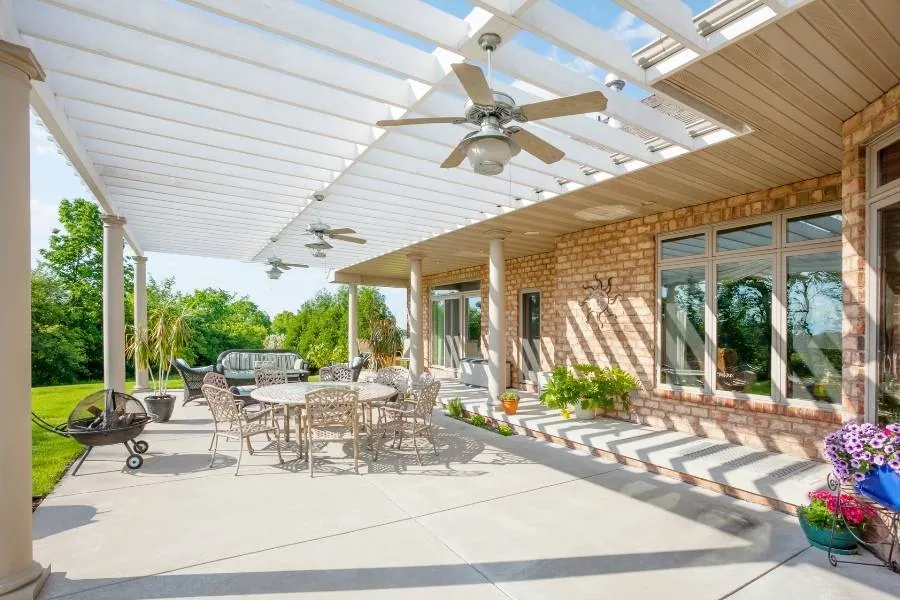
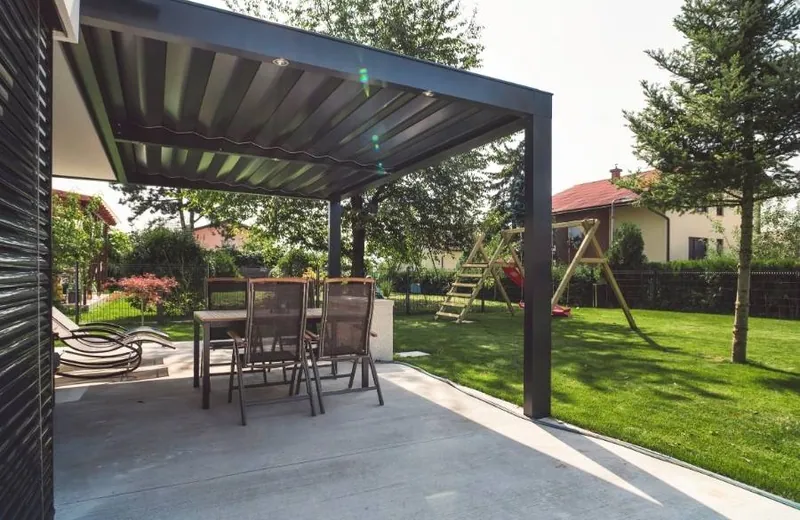
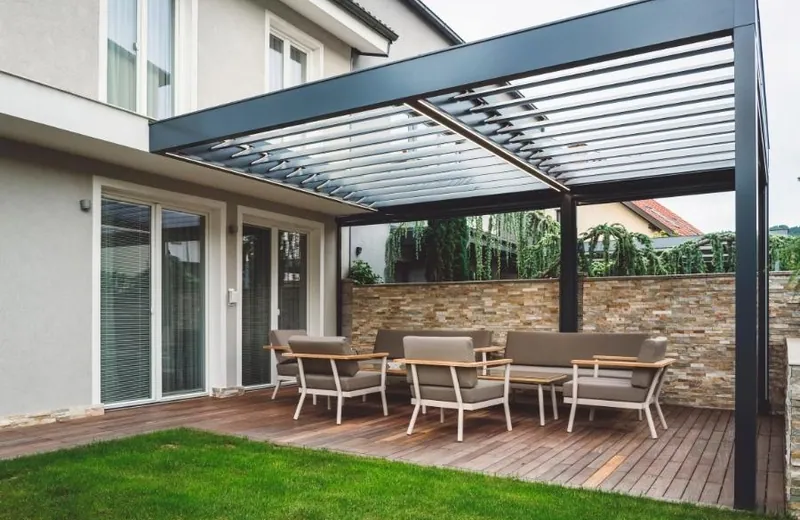
Pergola & Deck Cover Installation

We build pergolas and solid deck covers that bring shade to your deck so you can actually use it in a Texas summer.

Our approach

We set posts on proper footings, use wind-rated connectors, and offer open slats, louvered or solid roofs. Covers are designed with setbacks and permits in mind.

In Temple, TX

Shade is the number-one request we hear in Temple, Belton and Salado. A well-built cover can stand up to spring hail and straight-line winds that tear apart flimsy kits.

Best for

Sunny decks and patios that sit empty from May through September.

Deck Skirting Installation

We install skirting that hides the space under your deck, keeps animals out and finishes the look.

Our approach

We use vented lattice, horizontal slats or composite panels with ground clearance so air moves and moisture doesn't wick up into the wood.

In Temple, TX

Proper ventilation is critical on Temple's clay soils, where closed skirting traps moisture and draws termites.

Best for

Ground-level and mid-height decks that need a finished, critter-proof base.

Deck Cleaning & Washing

We deep-clean decks to remove dirt, mildew, pollen and gray weathered fibers.

Our approach

We use appropriate cleaners and controlled low-pressure washing that won't gouge wood or damage composite, then rinse and let the deck dry fully.

In Temple, TX

Annual cleaning keeps shaded decks near Salado Creek and Pepper Creek free of mildew and prepares sun-faded decks for sealing.

Best for

Routine upkeep and prep before staining.

Deck Staining & Sealing

We apply penetrating stains and sealers that protect wood from UV, water and cracking.

Our approach

We clean and prep, check moisture content, and apply UV-resistant semi-transparent or penetrating finishes. Then we give you a recommended re-coat interval.

In Temple, TX

Temple's sun breaks finishes down in roughly 1–3 years. Staying on schedule is the cheapest way to extend the life of a wood deck.

Best for

Cedar, pine and redwood decks that are graying or losing their finish.

Deck Painting Services

We paint decks, railings and trim to refresh the look or match the house.

Our approach

We do thorough prep, priming and deck-rated coatings. Paint goes where it holds up best, like railings and fascia, and we steer horizontal surfaces toward penetrating stains.

In Temple, TX

Painted railings and trim suit historic bungalows near downtown Temple. We'll tell you plainly where paint will peel in our heat.

Best for

Railings, trim and older decks needing a cosmetic refresh.

Deck Resurfacing & Refinishing

We replace worn deck boards with new wood or composite and keep the existing structure if it's sound.

Our approach

We inspect and reinforce the framing first, add hangers and flashing if they're missing, then install new boards and finish or trim.

In Temple, TX

Plenty of older Temple and Belton decks have solid frames under cupped, splintered boards. Resurfacing with composite is a cost-effective upgrade.

Best for

Decks with sound framing and worn-out surfaces.

Deck Waterproofing Services

We waterproof decks and the areas underneath them, protecting framing and creating dry space below elevated decks.

Our approach

We install joist tape, under-deck drainage systems and membrane details at ledgers and posts to keep water away from the structure.

In Temple, TX

Heavy May–June downpours soak framing fast. Under-deck drainage turns space below lake-lot decks in Morgan's Point Resort into usable shade.

Best for

Elevated decks and anyone wanting dry storage or patio space below.

Covered Patio & Deck Enclosures

We build covered patios and partially or fully enclosed decks, including screened porches, for comfort and bug protection.

Our approach

We design roofs for wind loads, use proper footings and tie-ins, and add screens or panels. Permits and setbacks are confirmed up front.

In Temple, TX

Screened, covered spaces let Temple families use the deck through mosquito season and summer heat, and they add appeal at resale.

Best for

Homeowners who want three-season outdoor living with shade and bug protection.

Ground Level Deck Installation

We build low-profile decks just above grade to extend or replace small concrete patios.

Our approach

We use low-clearance framing with ground-contact lumber, solid footings, weed control and drainage so the deck stays dry.

In Temple, TX

Most new homes in south and west Temple, Belton and Nolanville come with small builder patios. A ground-level deck is the fastest way to double that space.

Best for

New-construction homes and flat backyards.

Deck Privacy Solutions

We add privacy walls, screens and planters that shield your deck from neighbors and the afternoon sun.

Our approach

We build slatted screens, lattice or composite panels anchored to structural posts, and design for wind load and HOA height limits.

In Temple, TX

Tight lots in newer Temple and Belton subdivisions put neighbors close. Privacy screens also block low western sun on summer evenings.

Best for

Close-set homes and decks facing neighbors or streets.

Balcony Deck Renovation

We renovate second-story balconies with new structure, waterproofing, decking and railings as needed.

Our approach

We inspect cantilevers and connections, correct flashing and drainage, and install code-compliant guards and durable surfaces.

In Temple, TX

Balconies on 1980s–2000s homes and lake houses often hide rot at the house connection. Fixing that is a safety must.

Best for

Aging upper-story balconies showing rot, leaks or loose railings.

Cantilever Deck Construction

We build cantilevered decks that extend past their supports for a floating look or to clear obstacles.

Our approach

We calculate allowable cantilever spans by code and use proper beam sizing, blocking and hardware.

In Temple, TX

Cantilevers help lake-view decks reach farther out on sloped lots without adding posts to rocky slopes or crossing property lines.

Best for

Sloped lots, view decks and clean architectural designs.

Composite Fence Installation

We install composite privacy fencing that won't rot, warp or need staining, and we can match it to your deck.

Our approach

We set posts in concrete at proper depth, use metal post sleeves or cores, and run panels designed for wind.

In Temple, TX

Composite fencing holds up to Temple's UV and wet-dry clay swings better than wood pickets, which lean and gray within a few years.

Best for

Homeowners who want matching, low-maintenance privacy around the deck and yard.

Outdoor Stair Railing Installation

We install and replace handrails and guards on exterior stairs, porches and entries.

Our approach

We install graspable handrails at code height, secure posts structurally, and choose wood, composite or aluminum to match the space.

In Temple, TX

Rural farmhouses in Pendleton and Holland and raised historic homes in Temple often have steps with no safe handrail at all.

Best for

Porches, entry steps and aging-in-place upgrades.

Deck Framing & Structural Repair

We repair and reinforce deck structures: footings, posts, beams, joists, ledgers and lateral connections.

Our approach

We replace rotted members, sister joists, install hangers and lateral-load connectors, and re-pier footings that have moved.

In Temple, TX

Clay heave and old, unflashed ledgers make structural repair one of the most important services we offer in Temple's older neighborhoods.

Best for

Decks that bounce, sag, lean or pull away from the house.

Simple & Transparent

How We Build Your Deck

Here's how a Temple Deck Builders project runs, from the first visit to the final walkthrough. There are five clear steps, nothing gets hidden, and you'll have a firm schedule so you know when your deck will be ready.

Design Consultation & Site Visit

  • Walk the yard and discuss how you'll use the deck
  • Check soil, slope, drainage, sun exposure and the house connection
  • Look at the existing deck or patio if there is one
  • Bring material samples so you can see and feel composite, cedar and pine

We note clay vs. limestone conditions, HOA requirements and whether the lot touches Corps of Engineers land or a floodplain.

Within about a week of your call; visit takes 60–90 minutes

Design, Materials & Written Proposal

  • Scaled layout and framing plan
  • Material options with honest upkeep expectations for Central Texas sun
  • Itemized proposal with clear pricing
  • Financing options if you want them

We size footings and post bases for your soil type and explain heat performance for each decking color.

About 1–2 weeks

Permits, HOA Approval & Scheduling

  • Prepare and submit permit documents to the right city
  • Help you assemble an HOA submittal
  • Request Texas 811 utility locates
  • Lock in a firm construction schedule

Temple, Belton, Salado, Nolanville and the other cities each have their own permit offices, and Salado's historic district may require design review.

Typically 1–4 weeks depending on city and HOA

Construction

  • Dig or rock-drill footings and pour concrete piers
  • Frame with ground-contact lumber, hangers and lateral-load hardware
  • Flash and bolt the ledger or build freestanding
  • Install decking, railings, stairs and any cover

We plan pours around spring storms and summer heat. West-side limestone lots may need rock-drilling equipment.

Usually 3–10 working days for most decks; longer for multi-level or covered builds

Inspection, Walkthrough & Care Plan

  • Coordinate any required city inspections
  • Walk the finished deck with you
  • Clean up the site and haul off debris
  • Leave you a care and maintenance schedule

Your care plan covers re-sealing intervals for Temple's UV and what to check after hail or wind storms.

Final day plus city inspection timing
The Temple Deck Builders Difference

Why Temple Homeowners Choose Temple Deck Builders

We Build for Bell County Soil, Not a Generic Spec Sheet

A deck that works in Dallas or Houston can fail here. In east Temple, Rogers and Holland we're working in Houston Black clay that heaves and shrinks. In Belton, Salado and Morgan's Point Resort we're drilling into limestone. We size and set footings for the ground you actually have, use adjustable or well-detailed post bases where the clay moves, and plan drainage so water doesn't pool around piers. That's how you get a deck that stays level and solid through years of drought, downpours and the occasional ice storm.

Bonded, Insured and Local

Temple Deck Builders is bonded and insured, so your home and your investment are protected while we work. We're local, not a storm-chasing crew that disappears after hail season. We've served Temple and Bell County since 2020, and our reputation is built one backyard at a time in the same neighborhoods where we live, shop and cheer on Friday night football. When you call after the job's done, you'll reach the people who built your deck.

Deck Specialists from Footing to Pergola

Decks are what we do. Our services cover composite, cedar, pressure-treated, PVC and IPE decks, plus pool and hot tub decks, multi-level designs, railings, stairs, pergolas and covered patios, and structural repair. Because we focus on outdoor living structures, we know the details that matter: ledger flashing, joist hangers, lateral-load connectors, guard heights, baluster spacing and stair geometry. You get a builder who understands both how a deck looks and how it's put together.

Honest Material Advice for Texas Heat

We'll tell you straight what each option needs. Pressure-treated pine is affordable but needs sealing every 1–3 years in our sun. Cedar is beautiful and needs similar care. Composite and PVC cost more up front but skip the staining, though dark colors can get hot underfoot by midsummer. We bring material samples to your consultation so you can compare color, texture and heat for yourself, then choose what fits your budget and how much maintenance you're willing to do.

Permit Guidance and HOA Help Included

Every city in our area has its own permit office, and many subdivisions in Temple, Belton, Salado and Nolanville require HOA approval before work starts. We guide you through it: figuring out when a permit is needed, preparing drawings, helping with HOA submittals, requesting Texas 811 locates, and checking setbacks, historic-district rules in Salado and Corps of Engineers boundaries on lake lots. The paperwork doesn't have to stall your project.

A Firm Schedule and Transparent Pricing

Bell County is growing fast and good contractors are busy, so vague timelines are a common frustration. We give you an itemized proposal and a firm construction schedule before any work starts, and we keep you updated if storms push a pour. That matters a lot to military families at Fort Cavazos planning around a PCS move and to anyone getting a home ready to list.

Financing Available

A well-built deck, pool surround or covered patio is a real investment. We offer financing so you can build the deck you actually want now, without waiting another summer or cutting corners on framing to make the numbers work. We'll go over options during your consultation so you can compare monthly payments alongside material choices and decide what makes sense for your household.

Trusted Locally

A Local Deck Builder You Can Trust

Since 2020, Temple-area homeowners have trusted us to build decks that stay level on Blackland clay, hold up to Texas sun and storms, and connect naturally to how they live outdoors.

2020
Serving Bell County Since
20 mi
Service Radius from Temple
14
Communities Served
35
Deck & Outdoor Services
BondedInsuredFinancing available
Where We Work

Areas We Serve Around Temple, TX

We build decks within about 20 miles of Temple. That takes in Blackland clay towns to the east, limestone and lake country to the west, and fast-growing subdivisions in between. Each area has its own soil, permits and style, and we plan every build around them.

Temple & Nearby Communities

TempleHeidenheimerLittle River-AcademyPendleton

Belton, Lake Country & West Bell County

BeltonMorgan's Point ResortSaladoNolanville

North & East Rural Communities

TroyRogersHollandMoodyEddyBruceville-Eddy

Our standard service radius is about 20 miles from Temple. If you're near the edge, like Moody or Bruceville-Eddy, call us and we'll confirm availability for your address. Not sure if we cover your area? Call (254) 282-5383.

Transparent Pricing

How Much Does a Deck Cost in Temple, TX?

Most new decks in the Temple area range from roughly $30 per square foot for basic pressure-treated builds to $100+ for premium composite, hardwood or elevated designs. Here's what moves the price and what typical local projects cost.

Primary Factor

Decking Material

Material is the biggest single driver. Pressure-treated Southern Yellow Pine is the most affordable. Cedar and redwood cost more, and capped composite and PVC run higher still. IPE hardwood sits at the top. Keep in mind that wood needs re-sealing every 1–3 years under Temple's UV, so a cheaper deck can cost more over 15 years once you add stain, labor and board replacement. We'll lay out both the up-front and long-term costs side by side.

Primary Factor

Size, Height and Design Complexity

A simple rectangular ground-level deck is the most efficient build per square foot. Elevated decks need taller posts, bigger beams, code-height guards and more stairs. Multi-level designs, angles, curves, built-in benches and picture-frame borders all add labor and material. Raised pier-and-beam homes near downtown Temple and sloped lake lots in Morgan's Point Resort typically land higher on the scale than flat new-construction backyards.

Major Factor

Soil and Footing Conditions

What's underground matters a lot here. On Blackland clay we use deeper, properly sized piers to resist heave and settlement. On limestone lots in Belton, Salado and Nolanville, footings may need rock augers or core drilling, which adds equipment and time. Steep slopes, poor drainage and floodplain requirements can also add footing and engineering costs.

Major Factor

Railings, Stairs and Covers

Railings are priced per linear foot. Basic wood is the cheapest option, while composite, aluminum and cable systems cost progressively more. Stairs and landings add cost with every step. Pergolas and solid deck covers are significant add-ons because they need their own footings, wind-rated connections and often a separate permit, but in Temple they're frequently what makes the deck usable all summer.

Secondary Factor

Permits, HOA and Site Access

Permit fees vary by city across Temple, Belton, Salado and the rest of our service area. HOA approvals can add design time. Tight side yards in newer subdivisions, fence removal, demolition of an old deck and haul-off all affect labor. Repairs and refinishing are priced separately based on what the inspection turns up.

Typical projectDetailsEstimated range
Ground-level pressure-treated deck extending a builder patioAbout 12×16 ft (192 sq ft) in a south Temple or Nolanville subdivision, no railing needed, simple steps$6,500 – $11,500
Composite deck with aluminum railingAbout 16×20 ft (320 sq ft), 3–4 ft high, composite decking, aluminum rail, one stair run, in Belton or west Temple$22,000 – $38,000
Covered deck with cedar pergolaAbout 14×16 ft pressure-treated deck with an attached cedar pergola or solid cover for shade, permitted$18,000 – $32,000
Multi-level lake-view deckTwo or three tiers on a sloped, rocky Lake Belton or Stillhouse Hollow lot, composite boards, cable railing, rock-drilled footings$55,000 – $110,000+

Financing is available. Ask about payment options during your design consultation. In a resale-heavy market shaped by Fort Cavazos moves and Austin transplants, a well-built, permitted deck with shade is a selling point buyers notice. Building it right the first time also avoids the cost of tearing out a failing deck later.

Questions & Answers

Deck Building FAQs for Temple Homeowners

How much does it cost to build a deck in Temple, TX?

Most new decks around Temple fall between about $30 and $100+ per square foot. A basic 12×16 ground-level pressure-treated deck often runs $6,500–$11,500, while a mid-size composite deck with aluminum railing commonly lands between $22,000 and $38,000. Multi-level lake-view decks on rocky lots can top $100,000. The biggest factors are material, height, railings, covers and soil. Limestone in Belton and Salado means rock drilling, and Blackland clay in Temple means deeper piers. We give you an itemized proposal after the design consultation so there are no surprises.

How long does it take to build a deck?

Most decks take about 3–10 working days on site once construction starts. Multi-level, covered or elevated projects take longer. Design and proposal usually take one to two weeks. Permits and HOA approvals add another one to four weeks, depending on the city and your association. Spring storms in May and June can push a concrete pour by a day or two, and we plan for that. You'll get a firm schedule before we start, which helps a lot if you're timing the project around a PCS move or a home listing.

Do I need a permit to build a deck in Temple or Belton?

Usually yes, if the deck is attached to the house, sits more than about 30 inches above grade, or carries a roof or pergola. Temple, Belton, Salado, Nolanville and the other cities each use IRC-based codes and have their own permit offices, so exact thresholds vary, and we confirm them for your address. Texas 811 utility locates are required before digging. Many subdivisions also need HOA approval. Salado's historic district and lake lots bordering Corps of Engineers land have extra rules. Unincorporated county areas have lighter permitting, but we still build to code.

Composite or wood: which is better for Central Texas?

It depends on your budget and how much upkeep you want. Pressure-treated pine costs the least up front, but Temple's UV means sealing roughly every 1–3 years, and sun-facing boards tend to cup and check. Cedar looks great and needs similar care. Composite and PVC cost more initially but don't need staining and won't rot or attract termites. The tradeoff is heat. Darker composite can get very hot by midsummer, so we usually recommend lighter colors and adding shade. We bring samples so you can compare them yourself.

How do you keep a deck from shifting on Temple's clay soil?

We size and set concrete piers deeper and wider than the shallow blocks many older decks sit on. That way the footings bear on more stable soil and resist the clay's swell and shrink cycle. We use adjustable or well-detailed post bases, keep wood off the ground, and grade or drain so water doesn't pool around footings. Freestanding designs can also isolate the deck from house movement. On the west side, where limestone sits close to the surface, we rock-drill footings into firm material instead.

How can I make my deck last longer in this heat?

Clean your deck once a year and re-seal wood every 1–3 years depending on sun exposure. South- and west-facing decks need it sooner. Keep soil, mulch and planters from sitting against posts and skirting so termites and rot don't get started. Check railings and fasteners every spring, especially after hail. Add shade with a pergola or cover to cut UV damage and surface heat. And make sure skirting is vented so moisture can escape. Small upkeep each year costs far less than replacing boards or framing.

When should I repair or replace my deck instead of waiting?

Act right away if the deck pulls away from the house, the ledger is fastened only to brick, railings wobble, or posts are soft at the base. Those are collapse and fall risks, and the deck shouldn't be used until it's fixed. Plan a repair soon if the floor slopes, boards are spongy, or you see termite mud tubes. If the framing is sound and only the surface is worn, resurfacing or refinishing is usually enough. If several structural problems show up together, replacement is often the smarter investment.

Can you help with hail or storm damage to my deck or pergola?

Yes. After a Bell County hailstorm or windstorm we inspect the deck, railings, pergola or cover, photograph and document the damage, and give you a written repair estimate you can share with your insurance company. Then we make the repairs or rebuild the structure with stronger footings, wind-rated connectors and hail-resistant materials. We're a local, bonded and insured builder, not an out-of-town storm crew, so we'll still be here after the claim closes.

Find Us

Serving Temple, TX & Nearby

416 N 3rd St, Temple, TX, 76501

Ready When You Are

Start Planning Your Temple Deck Today

Whether you want shade by summer, safer railings before your next cookout, or a lake-view deck that finally uses your slope, let's talk about your yard and build something made to last in Central Texas.

  • On-site design consultation
  • Material samples so you can compare look, feel and heat
  • Itemized, transparent proposal
  • Permit guidance and HOA submittal help
  • Footings engineered for clay or limestone soil
  • Firm, written construction schedule
  • Financing available, plus a bonded and insured crew

Serving Temple, Belton, Salado, Troy, Nolanville, Morgan's Point Resort, Little River-Academy, Heidenheimer and communities within about 20 miles.

Deck pulling away from the house or railing failing after a storm? Stay off it and call us. We'll prioritize safety inspections.

Bonded · Insured

Temple Deck Builders Free estimates across Temple, TX